Get 10% Off Your First Order Today! Use code at checkout: WELCOME10


Football Shirt Collar Types Explained: Crew, V-Neck, Polo and More

Quick Answer
Football shirt collar types fall into five groups: the crew neck (round ribbed band), the V-neck (deep or a short notch), the polo collar (fold-down with a buttoned placket), the open spread collar (fold-down with no buttons) and the band or grandad collar (short stand-up strip). Collar type does not change sizing; it changes how the shirt sits and layers.
Football shirt collar types fall into five groups: the crew neck (round ribbed band), the V-neck (deep or a short notch), the polo collar (fold-down with a buttoned placket), the open spread collar (fold-down with no buttons) and the band or grandad collar (short stand-up strip). Collar type does not change sizing; it changes how the shirt sits and layers.
In this article
Football shirt collar types come down to five shapes: the crew neck, the V-neck, the polo collar with buttons, the open spread collar and the band (grandad) collar. The shape changes how a shirt sits and layers. This guide explains each style with examples from retro shirts we stock.
Shop 1990s Retro Football Shirts Jerseys — home, away & player versions, worldwide shipping.Shop now
Squad Deal, 20 to 30 November: buy 2 eligible football shirts and get the third free. See how it works.
What collar types do football shirts have?
Most shirts fall into one of the groups below. The trim (a ribbed band, contrast tipping or stripes) changes the look, but the basic shape stays the same.
| Collar type | What it looks like | Example in our range | Best for |
|---|---|---|---|
| Crew neck | Round, close to the base of the neck, usually a ribbed band | Brazil 1970 home, Argentina 1986 home, Germany 1990 home | Layering under jackets and hoodies |
| V-neck | Neckline dips to a point at the front; can be deep or a short notch | France 1998 home, Arsenal 1991/93 away | A slightly dressier look |
| Polo collar | Fold-down collar with a buttoned placket | Celtic 1989/91 home | Wearing on its own |
| Open spread collar | Fold-down collar with no buttons, opening into a V | AC Milan 1988/89 home, Italy 1996 home, Arsenal 1998/99 home | A relaxed retro feel |
| Band (grandad) collar | Short stand-up band with no fold, often with a button at the front | Germany 1996 home | A neat look without collar points |
Crew neck
Shop 1990s Retro Football Shirts Jerseys
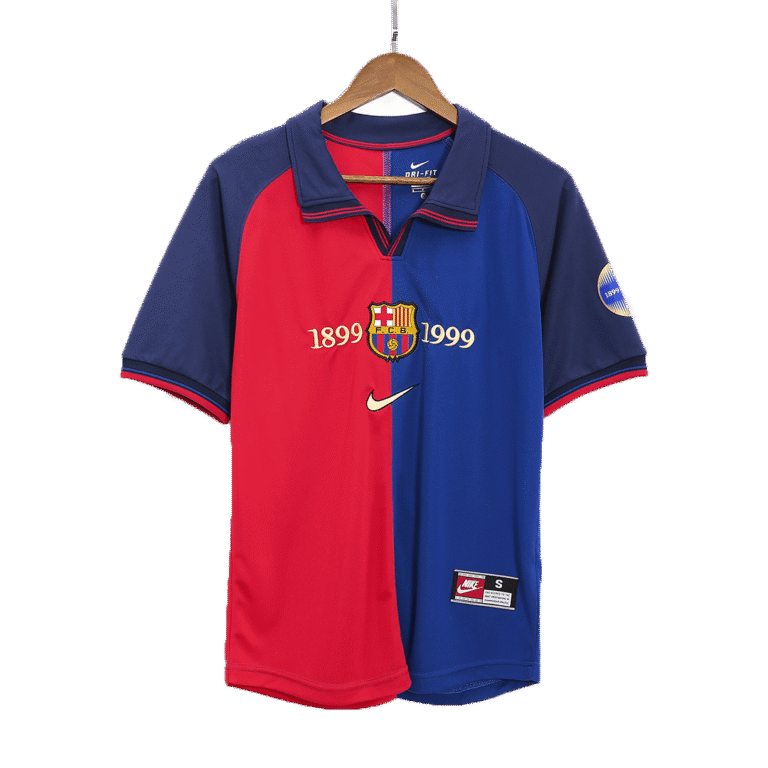

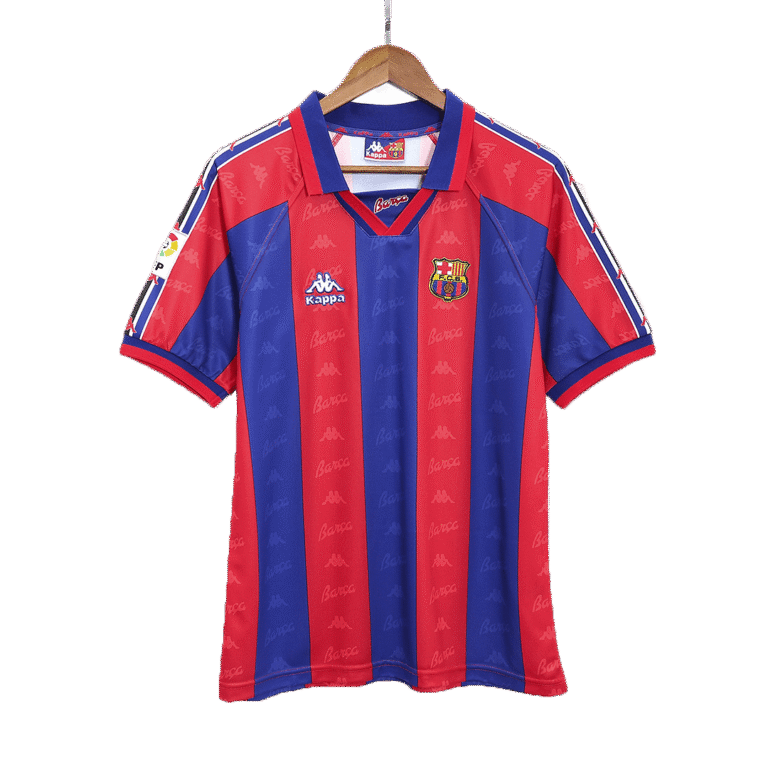
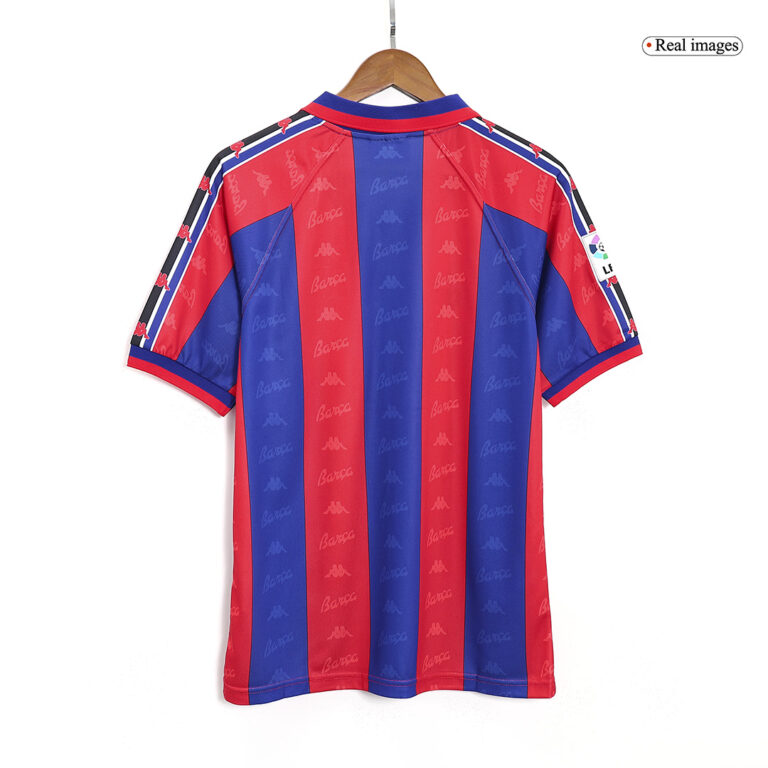


The crew neck is the simplest shape: a round opening with a ribbed band. It sits close to the neck, so nothing flaps or curls, and it is the easiest collar to wear under a coat, zip-up or hoodie.
A crew neck still leaves room for detail. The Brazil 1970 home retro uses a green band against the yellow body, and the green is repeated on the cuffs. The Argentina 1986 home retro keeps a plain white ribbed band on the sky-blue and white stripes. On the Germany 1990 home retro a white ribbed crew neck sits above the black, red and gold chevrons, which keeps attention on the chest design.
V-neck
A V-neck drops to a point at the front. A deep V looks dressier; a shallow notch looks closer to a crew neck.
The France 1998 home retro has a full V with white trim and a thin red edge, matching the red and white bands across the chest. The Arsenal 1991/93 away retro (the “bruised banana”) shows the shallow version: a round neckline with a short V notch at the front, trimmed in the same dark red as the pattern.
Polo collar
The polo collar folds down over a neck band, like a polo or rugby shirt, and has a short buttoned opening called a placket. It gives a shirt more structure and looks finished worn on its own.
The Celtic 1989/91 home retro is a clear example: a white fold-down collar with green stripes along the points and a two-button placket above the Umbro logo.
Open spread collar
An open spread collar also folds down, but it has no buttons, so the front opens into a V below the collar points. It looks more relaxed than a buttoned polo.
The AC Milan 1988/89 home retro has a red collar on the red and black stripes, opening into a black V at the throat. The Italy 1996 home retro pairs a blue collar with yellow tipping and a white and gold inset inside the V. The Arsenal 1998/99 home retro sets a plain white collar against the red body.
Band (grandad) collar
A band collar is a short stand-up strip around the neck with no fold and no points. Many have a single button at the front. The Germany 1996 home retro uses a black band with red and gold stripe trim and a one-button placket on the white body.
Which collar should you choose?
Collar shape does not change your size. Pick your usual size using our football shirt size guide, then let the collar decide how you wear the shirt:
- Under a jacket or hoodie: a crew neck sits flat and does not bunch.
- On its own: a polo, spread or band collar frames the face and looks finished without extra layers. Our styling guide has outfit ideas.
- Care: fold-down collars keep their shape best if you lay them flat to dry instead of tumble drying. See how to wash a football shirt for the full routine.
Can the collar help date a shirt?
The collar is one clue among several. Brands sometimes reuse older shapes, and retro remakes copy the earlier neckline. Read the collar together with the maker’s logo, the sponsor and the crest, as set out in our guide to telling what year a football shirt is from. You can browse more shapes in the 1990s retro shirts and 1980s retro shirts collections.
Frequently asked questions
What collar types do football shirts use?
No single collar is standard. Shirts use crew necks, V-necks, polo collars, open spread collars and band collars.
Does the collar type affect the fit?
No. The collar changes the neckline only; chest and length stay the same, so order your normal size.
What is a placket on a football shirt?
A placket is the short opening below a collar, closed with buttons. The Celtic 1989/91 home retro has a two-button placket and the Germany 1996 home retro has one button.
Do player version shirts have different collars from fan versions?
Collar shape can differ between versions, so check the product photos. Our player version vs fan version guide explains the other differences.
Shop 1990s Retro Football Shirts Jerseys — home, away & player versions, worldwide shipping.Shop now