Get 10% Off Your First Order Today! Use code at checkout: WELCOME10


How to Tell What Year a Football Shirt Is From

Quick Answer
To date a football shirt, check the kit manufacturer and chest sponsor first, because the overlap between the two deals is often only a few seasons. The crest, sleeve patches and the product code on the inside label narrow it further, and comparing the design settles the exact season.
To date a football shirt, check the kit manufacturer and chest sponsor first, because the overlap between the two deals is often only a few seasons. The crest, sleeve patches and the product code on the inside label narrow it further, and comparing the design settles the exact season.
To work out what year a football shirt is from, check four things in this order: the kit manufacturer and the chest sponsor, the crest, any league or competition sleeve patch, and the product code on the small label inside. Each one narrows the window. Together they usually pin a shirt to one or two seasons, and the design itself settles which one.
🛒 Shop 2000s Retro Football Shirts Jerseys — home, away & player versions, worldwide shipping.Shop Now →
Which clues date a football shirt fastest?
Start with what you can see from across a room, then move to the details. The table below ranks the clues by how much they narrow things down and how easy they are to check.
| Clue | Where to look | What it tells you | How precise |
|---|---|---|---|
| Kit manufacturer | Logo on the right chest | The supplier deal, often 5 to 20 years | Broad |
| Chest sponsor | Centre of the shirt | The sponsorship deal, often 2 to 8 years | Medium |
| Sleeve sponsor | Upper sleeve | In the Premier League, only allowed from 2017/18 onwards | Medium |
| Crest | Left chest | Before or after a redesign | Medium |
| League or cup patch | Sleeves | The patch design in use that season | Narrow |
| Product code | Small label inside, near the hem | The exact catalogue item | Exact, if legible |
| Design and colours | The whole shirt | Which season within the window | Exact, with photos to compare |
How do the manufacturer and sponsor narrow it down?
Shop 2000s Retro Football Shirts Jerseys
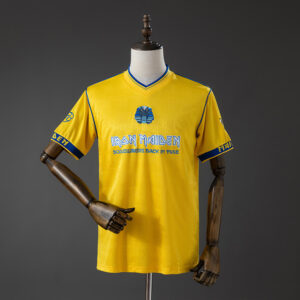
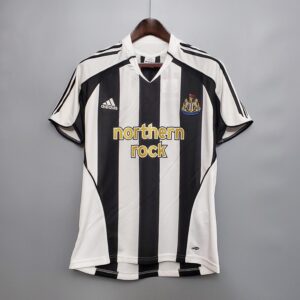
Clubs sign supplier and sponsor deals on different cycles, so the overlap between the two is often only a few seasons long. Arsenal is a good example. According to the club’s Wikipedia kit table, the eras run like this:
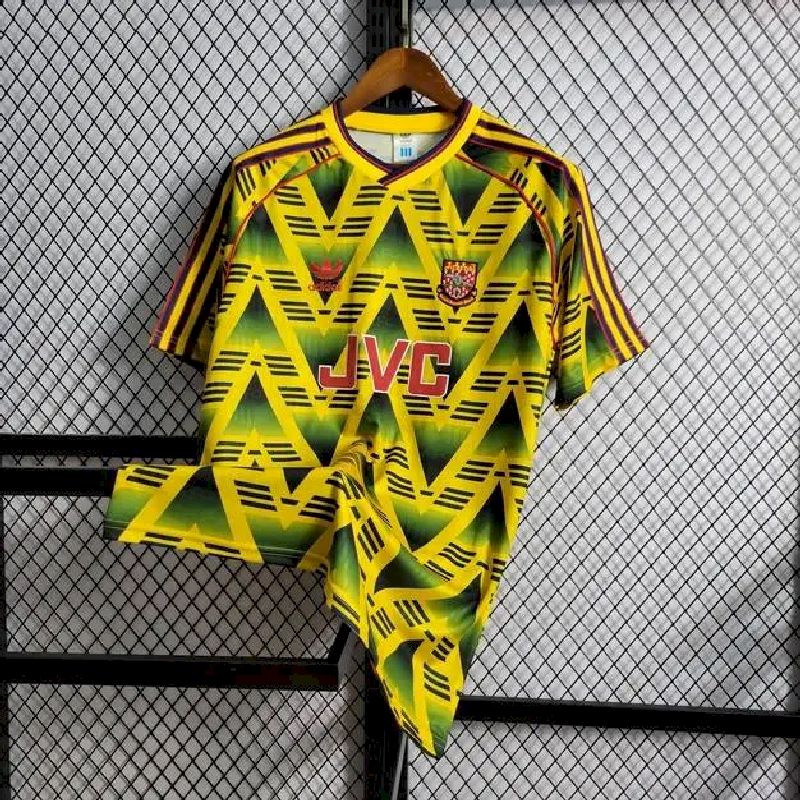
- Adidas made the kit from 1986 to 1994, and JVC was the sponsor from 1981 to 1999.
- Nike took over from 1994 to 2014.
- Dreamcast and SEGA were on the front from 1999 to 2002, then O2 from 2002 to 2006.
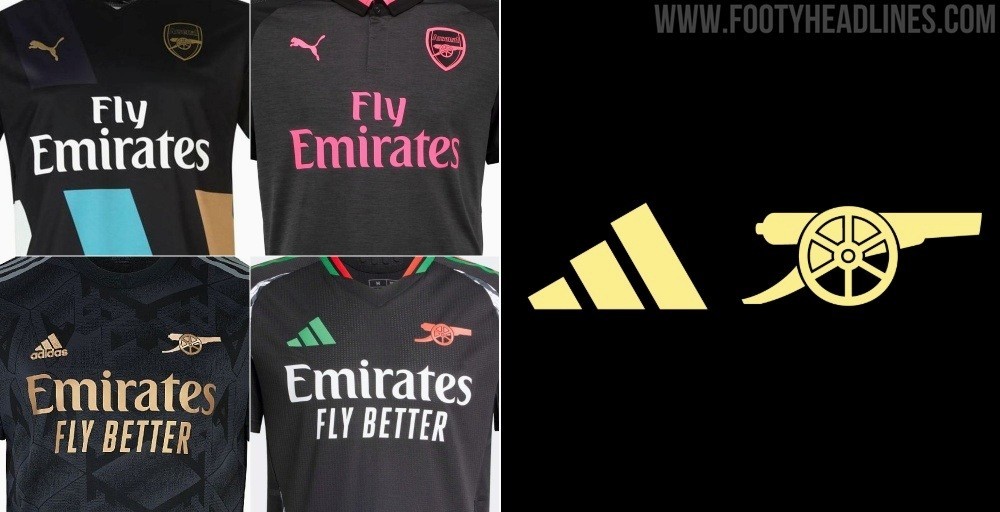
- Emirates arrived in 2006 and is still there. Puma made the kit from 2014 to 2019, and Adidas returned in 2019.
So an Adidas shirt with JVC on the front has to come from 1986 to 1994, which is the era of the 1991/93 “bruised banana” away kit. A Nike shirt with O2 can only be from 2002 to 2006. That leaves four seasons before you look at the crest.
Does the crest help?
Yes, whenever a club has redesigned it. Arsenal introduced its current crest in 2002, so a Nike shirt with the older crest and Dreamcast or SEGA lettering points to 1999 to 2002, such as the 1999/00 home long-sleeve shirt. The same logic works in reverse for recent seasons: Adidas brought back a cannon-only badge on the 2021/22 away kit, and by 2024/25 all three Arsenal kits used it.
Many clubs have refreshed their crests in the last 20 years, often with only small changes to lettering or outline. Comparing your shirt’s badge against dated photos of the club’s crest history is a quick way to rule out several seasons at once.
What do sleeve patches tell you?
League and competition patches change more often than crests, which makes them one of the most precise clues on the outside of a shirt. The Premier League switched to a new round patch with a purple border for 2016/17, as Footy Headlines reported at the time. A gold version is worn by the reigning champions and names the season they won it, so a shirt with “Champions 15/16” on the sleeve is from 2016/17.
Cup and continental badges work the same way. Our guide to football shirt patches and badges explains what each common patch means and where it sits.
Where is the product code and what does it show?
Most modern shirts have a small label sewn into the inside seam near the bottom. On Nike shirts this usually carries a style code of six characters (letters and numbers on recent shirts), a dash and three digits, as Football Shirt Collective explains. The last three digits are the colour. Searching the full code usually brings up the catalogue listing for that exact shirt, including the season.
Labels fade and get cut out, so treat the code as a bonus rather than a requirement. Older shirts from the 1980s and early 1990s often have no style code at all.
What about templates and design details?
Manufacturers reuse kit templates across several clubs in the same season, so a collar shape, sleeve trim or fabric pattern can point to a specific year. For a recent example, our post on the leaked Nike 27-28 template shows how one design appears across several teams. Comparing the cuffs, collar and side panels against photos of that club’s kits for each season inside your window is usually what settles the final answer.
Worked example: dating an Arsenal home shirt
- Manufacturer: Nike, so 1994 to 2014.
- Sponsor: O2, so 2002 to 2006.
- Crest: the newer badge, which fits 2002 onwards and changes nothing here.
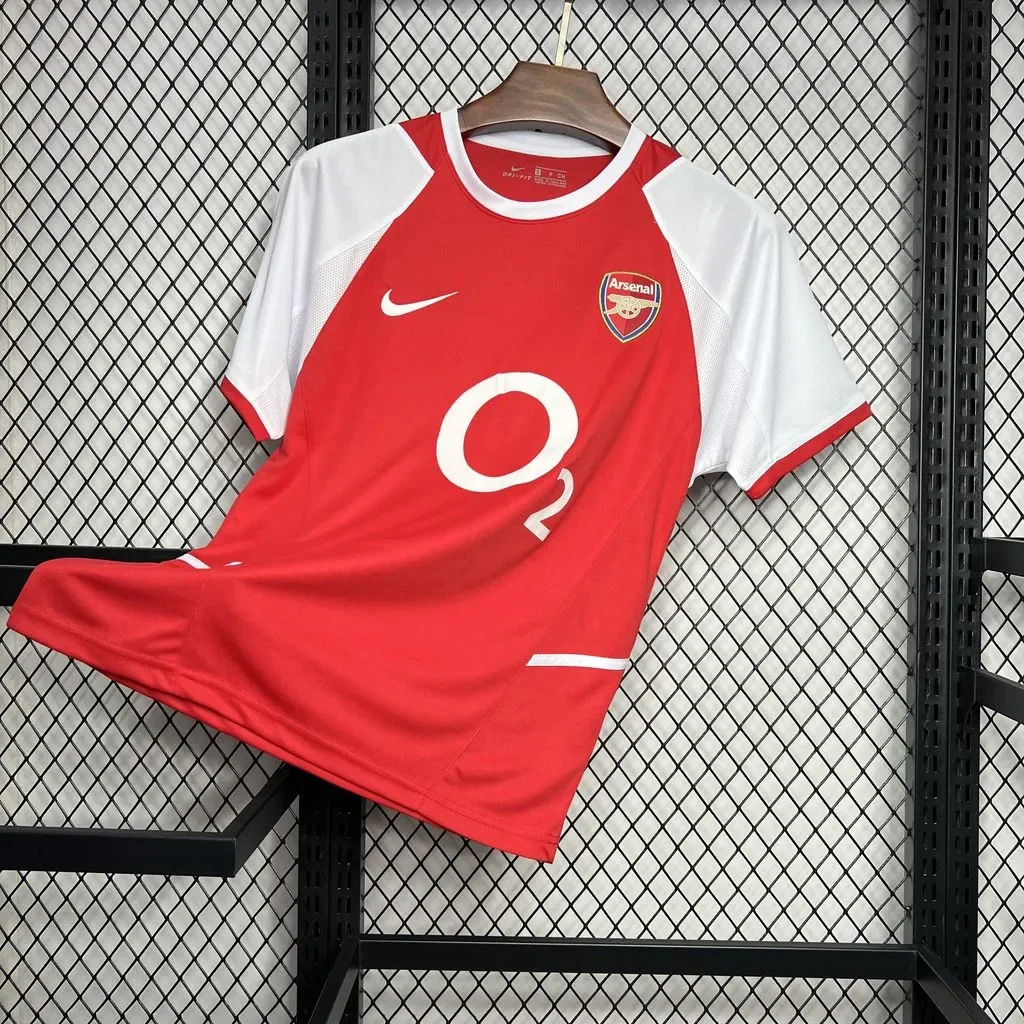
- Design: a redcurrant shirt rather than red and white means 2005/06, the last season at Highbury. A red shirt with white sleeves leaves 2002/03 to 2004/05, so compare the collar and trim with the 2002/04 home and the 2004/05 home.
Swap O2 for Emirates and you have moved to 2006 or later, which is when the club moved to its new stadium. The first shirt of that era was the 2006/07 home. Our Arsenal retro shirts guide walks through the rest of the club’s kit history.
Is it a period shirt or a retro remake?
A remake copies the crest, sponsor and colours of the season it represents, so every clue above will point to that season. What gives a remake away is the shirt itself: modern fabric, modern sizing, and a label with no period style code. The Arsenal 2005/06 home retro jersey we sell, for example, is a new reproduction of that design, not a shirt made in 2005. If you are deciding between the two, read our retro remake vs vintage comparison, or browse the 2000s retro range and the full retro collection.
FAQ
How can I tell what year my football shirt is from?
Check the kit manufacturer, the chest sponsor, the crest, any sleeve patch and the product code on the inside label. The overlap between the manufacturer deal and the sponsor deal usually narrows it to a few seasons, and the design settles the rest.
Where is the product code on a Nike football shirt?
On a small label sewn inside the shirt, usually near the bottom seam. It normally reads as six characters, a dash and three digits, with the last three showing the colour.
Does the sponsor tell you the exact season?
Not on its own, because sponsorship deals often run for several years. Combine it with the kit manufacturer and the crest to get a short window, then compare the design.
Do retro remakes show the season they copy?
Yes. A remake reproduces the crest, sponsor and colours of one season, so the outside clues match that season. The fabric, fit and inside label show it is a modern shirt.
433FC is an independent retailer of replica supporter shirts, not affiliated with any club, league or manufacturer.
🛒 Shop 2000s Retro Football Shirts Jerseys — home, away & player versions, worldwide shipping.Shop Now →



 Premier League
 La Liga










 Serie A





 Bundesliga












 Liga MX






 Liga Portugal




 Ligue 1







 Kings League








 Brasileiro Serie A





















 MLS







 Other Leagues