
Blog
Nigeria 2018 World Cup Kit: The Shirt That Sold Out in Minutes

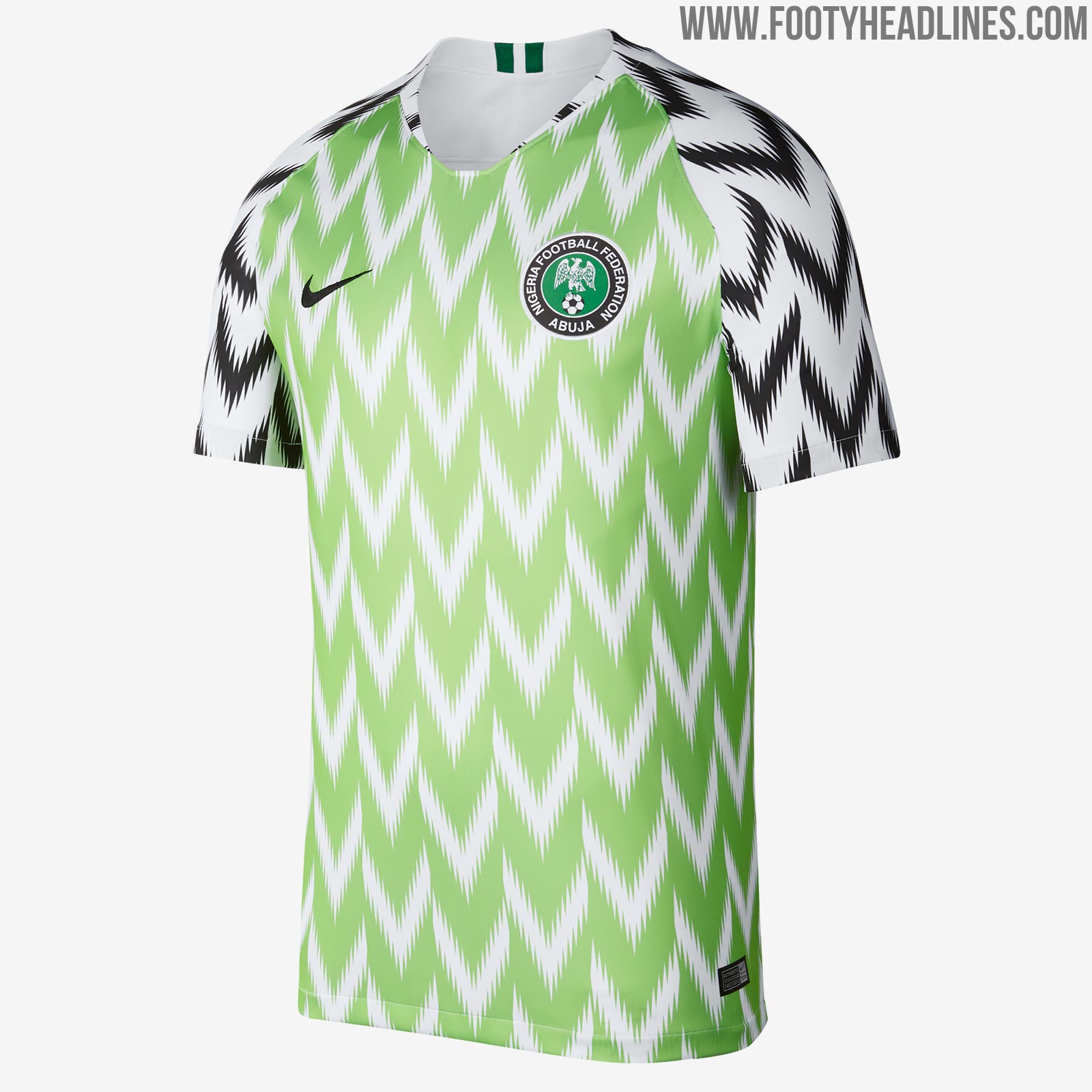
Nike’s Nigeria 2018 World Cup home shirt, designed by Matthew Wolff, used a white and lime green chevron pattern inspired by Nigeria’s 1994 kit. The Nigerian Football Federation reported a record three million pre-orders, and the shirt sold out in about three minutes online. It is now in the V&A collection.
In February 2018 Nike unveiled a lime green and white chevron shirt for Nigeria that looked like nothing else at that summer’s World Cup. It drew a reported three million pre-orders, sold out in minutes online, and ended up in a museum. Here is why it still matters.
Why was the Nigeria 2018 World Cup kit so popular?
Because demand was unprecedented for an international shirt: the Nigerian Football Federation said Nike had taken a record three million pre-orders, and the kit later entered the Victoria and Albert Museum collection. The design — an alternating white and lime green chevron torso with black-and-white chevron sleeves — looked nothing like the templates worn by most nations in Russia.
The V&A links that appetite to a wider moment: the global rise of Afrobeats and Nigerian popular culture through the 2010s. Fans bought the shirt as clothing rather than as matchday kit, which is why it moved in numbers no result could have generated.
Treat the headline figure carefully. Three million is a claimed pre-order total announced by the federation, not audited sales, and it is not directly comparable to Manchester United’s reported 2.85 million shirts sold worldwide across the whole of 2016. The comparison is still useful for scale — it is simply not like for like.
Who designed the Nigeria 2018 shirt?
It was designed by Matthew Wolff, then head graphic designer at Nike. According to the Victoria and Albert Museum, which holds the kit in its collection, Wolff drew on Nigeria’s first World Cup shirt from 1994 and on the Super Eagles nickname, blending those references with contemporary Naija culture rather than reproducing a straight retro copy.
The shirt was made from Nike Vaporknit, a recycled polyester construction. It was released as part of a full collection rather than as a standalone kit, which is a large part of why the launch behaved like a fashion drop. Browse the current retro shirt category and you can see how many later releases borrowed that playbook.
How quickly did the Nigeria 2018 kit sell out?
Almost immediately. The V&A record notes the collection sold out within an hour in-store and in about three minutes online after going on sale on 1 June 2018. Contemporary reporting described fans queuing outside Nike’s flagship store on Oxford Street in London. Nike restocked the shirt later that year.
What was the 1994 shirt it referenced?
Nigeria’s 1994 World Cup shirt was a predominantly green design, and it is the kit Wolff cited as his starting point. The key correction to most write-ups of the 2018 revival is the manufacturer: 1994 was an Adidas shirt, made during Adidas’s spell as supplier, whereas Nike’s current partnership with the Nigerian federation began in 2015.
That 1994 side also went furthest of any Nigeria team at a World Cup, reaching the Round of 16 before losing 2-1 to Italy after extra time — Emmanuel Amuneke scoring early, Roberto Baggio equalising in the 89th minute and converting the winning penalty in the 100th.
The two shirts compare as follows.
| Detail | Nigeria 1994 | Nigeria 2018 |
|---|---|---|
| Manufacturer | Adidas | Nike |
| Base colour | Green | Lime green and white |
| Defining feature | The design the 2018 shirt referenced | Chevron torso, black-and-white chevron sleeves |
| Tournament result | Round of 16 | Group stage exit |
How did Nigeria perform in the shirt at Russia 2018?
Modestly, which is part of the story. Nigeria lost 2-0 to Croatia, then beat Iceland 2-0 with a brace from Ahmed Musa that put them second in Group D. Against Argentina they trailed to a Lionel Messi goal on 14 minutes, equalised through a Victor Moses penalty on 51, and lost 2-1 when Marcos Rojo volleyed in on 86. Nigeria finished third and went out.
The shirt’s reputation is therefore almost entirely independent of results — unusual for a kit, and a reminder that design and cultural timing can outlast a scoreline. The Super Eagles name itself dates to a reception after the 1988 Africa Cup of Nations; before that the side were the Green Eagles.
Is the Nigeria 2018 kit in a museum?
Yes. The Victoria and Albert Museum in London acquired the shirt for its permanent collection, citing both its commercial impact and what it signalled about the global rise of Nigerian popular culture. Very few football shirts are collected on those terms, and fewer still from a side that did not get out of its group.
How did the 2018 kit change football shirt design?
It widened what manufacturers were willing to risk on a national team. Loud all-over graphics became normal. So did treating pre-match pieces as standalone products, and designing collections for the street as much as the pitch. You can see the inheritance across the current Nigeria shirt range, which has kept a more adventurous graphic streak than most national teams.
If you are working backwards through the era, our companion pieces on the USA 1994 denim kit, the Croatia 1998 chequerboard and the Mexico 1998 home shirt cover the other high-water marks of graphic kit design. There is also a broader list of the most iconic retro football kits.
For the tournament ahead, the 2026 World Cup range is where the current generation of national-team designs sits. And if you are planning to add a name and number to any of them, our guide to what squad numbers 1-11 mean explains the conventions first.

 Premier League
 La Liga







 Serie A




 Bundesliga




 Liga MX


 Liga Portugal
 Ligue 1


 Kings League



 Brasileiro Serie A






 MLS
MLS



 Other Leagues