
Blog
Kids’ Football Shirt Size Guide: What Sizes 16-28 Mean

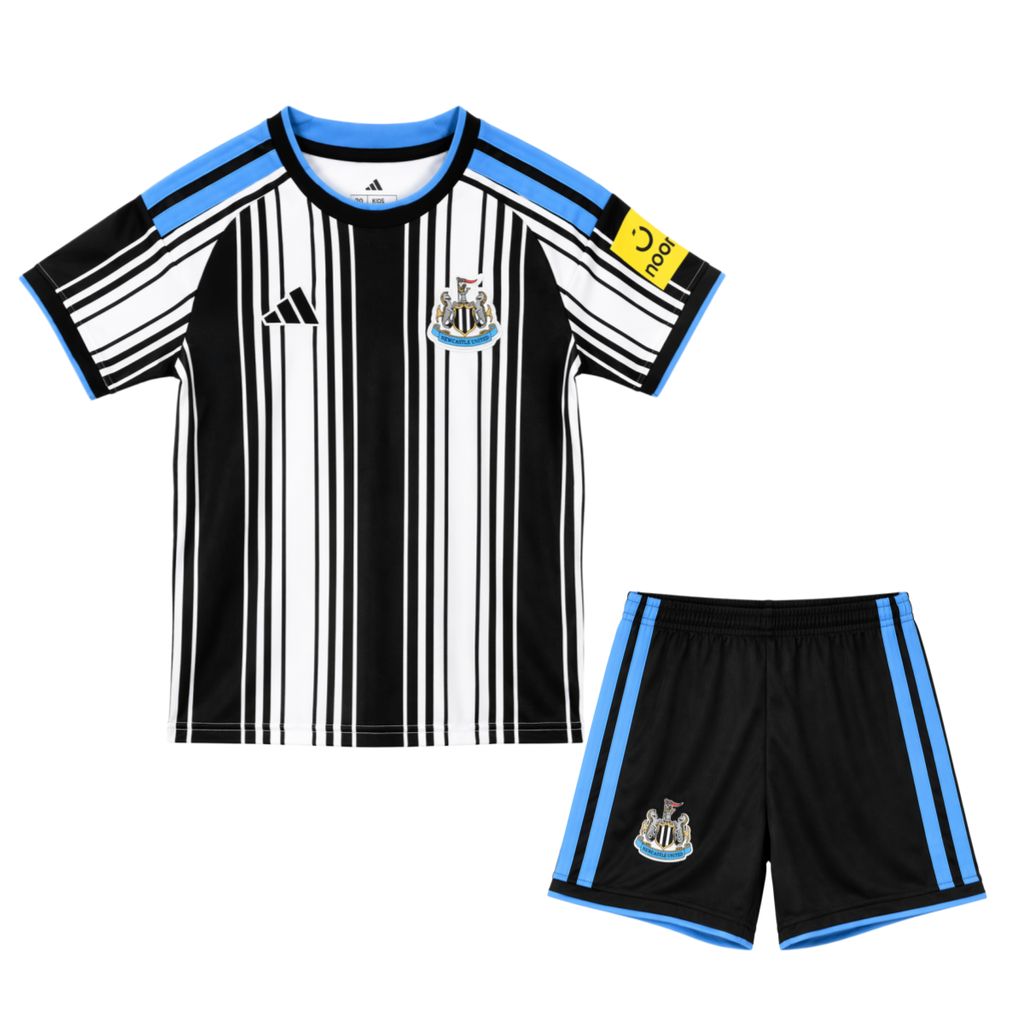
Kids’ football kits sized 16 to 28 use a European youth scale, not UK ages or chest inches. Size 16 fits about 3-4 years (95-105cm), 20 fits 5-6 years, 24 fits 8-9 years and 28 fits 12-13 years. Each step up adds roughly 10cm of height. Measure the child’s height first, then chest; age is the least reliable guide.
Kids’ football kits sized 16 to 28 use a European youth scale, not UK ages or chest inches. Size 16 fits roughly 3-4 years (95-105cm tall), and each step up adds about 10cm of height: 20 suits 5-6 years, 24 suits 8-9 years, and 28 suits 12-13 years. Measure the child’s height first.
If you have only ever bought a junior kit from a club shop, the numbers on an imported kids’ kit look like nothing you recognise. Nike labels its youth shirts XS to XL. Adidas prints 128, 140, 152. Many imported kits, including every kids’ kit at 433FC, run on a third scale entirely: 16, 18, 20, 22, 24, 26, 28. The scale is consistent and easy to convert once you know what the numbers refer to.
What do kids’ football shirt sizes 16 to 28 actually mean?
They are not ages, and they are not inches. The numbers sit on a European youth scale that tracks height and chest together, in even steps. Each two-point increase adds roughly 10cm of height and 4cm of chest, which is why the range covers a decade of growth in only seven sizes.
| Size | Typical age | Height | Chest |
|---|---|---|---|
| 16 | 3-4 years | 95-105cm | 70cm |
| 18 | 4-5 years | 105-115cm | 74cm |
| 20 | 5-6 years | 115-125cm | 78cm |
| 22 | 7-8 years | 125-135cm | 82cm |
| 24 | 8-9 years | 135-145cm | 86cm |
| 26 | 10-11 years | 145-155cm | 90cm |
| 28 | 12-13 years | 155-165cm | 94cm |
Measurements are approximate and vary a little by club and manufacturer. Height is the reliable column.
There is a shortcut buried in that table. Chest in centimetres is exactly double the size number plus 38: size 22 gives 82cm, size 28 gives 94cm, and it holds across the whole range. If you already know the child’s chest measurement, that formula gets you close without a chart, but check the height band too and use the tie-break rule further down if the two disagree.
If the age column skips your child, and there is no row for six to seven years, that is exactly why height wins. Measure and use the height band.
How do these sizes compare with Nike and Adidas junior kits?
Adidas is the simplest comparison because its junior numbers are the child’s height in centimetres: a 140 is cut for a child 140cm tall. Nike uses letters, and its youth chart is published in inches. Lining all three up against height is the only reliable way to cross-shop.
| Child’s height | 433FC size | Adidas junior | Nike youth |
|---|---|---|---|
| 115-125cm | 20 | 116 | Below XS |
| 125-135cm | 22 | 128-134 | XS |
| 135-145cm | 24 | 140 | S-M |
| 145-155cm | 26 | 146-152 | M-L |
| 155-165cm | 28 | 158-164 | L-XL |
Nike’s own youth chart puts XS at 48-50in (122-127cm) for ages 7-8 and XL at 62-67in (157-170cm) for ages 13-15, so a size 24 straddles Nike S and M rather than matching either exactly. Where a child falls between two rows, the height column wins.
Should you size up for a growing child?
One size, at most, and only when the child is already near the top of their height band. A kit two sizes too big does not last twice as long — the shoulder seams drop past the arm, the sleeves cover the elbow, and the shirt gets left in the drawer. Match-fit kids’ shirts are cut looser than a school polo, so there is already room built in.
A useful test: if the child is at the lower end of a height band, take that size. If they are at the top of it and a growth spurt is obviously in progress, take the next one up. Kids’ kits at 433FC ship as a matched shirt-and-shorts set, so both pieces move up together rather than leaving you to pair sizes yourself.
Which measurement should you trust — age, height or chest?
Height, then chest, then age. Age ranges are the least reliable guide on any kit chart because two eight-year-olds can easily differ by a full size band. Height decides where the hem and sleeves land, which is what makes a shirt look right. Chest decides whether it is comfortable to run in.
Measure height with shoes off against a wall, and measure chest at the widest point with the tape flat and the arms down. Compare both against the first table. If the two point to different sizes, take the larger of the two — a shirt that is slightly long is fine, a shirt that is tight across the chest is not.
What size comes after 28, and when should you move to adult sizes?
Size 28 is the top of the kids’ scale, at roughly 155-165cm and 12-13 years. Beyond that, a small adult shirt is often the better buy: adult S is cut longer in the body, so check our adult chart before assuming it swaps straight in. Our adult football shirt sizing guide covers where fan and player versions diverge, and the fit difference is significant — player-version shirts are cut tight and athletic, which rarely suits a teenager who is still filling out.
Popular kids’ kits and what to check before ordering
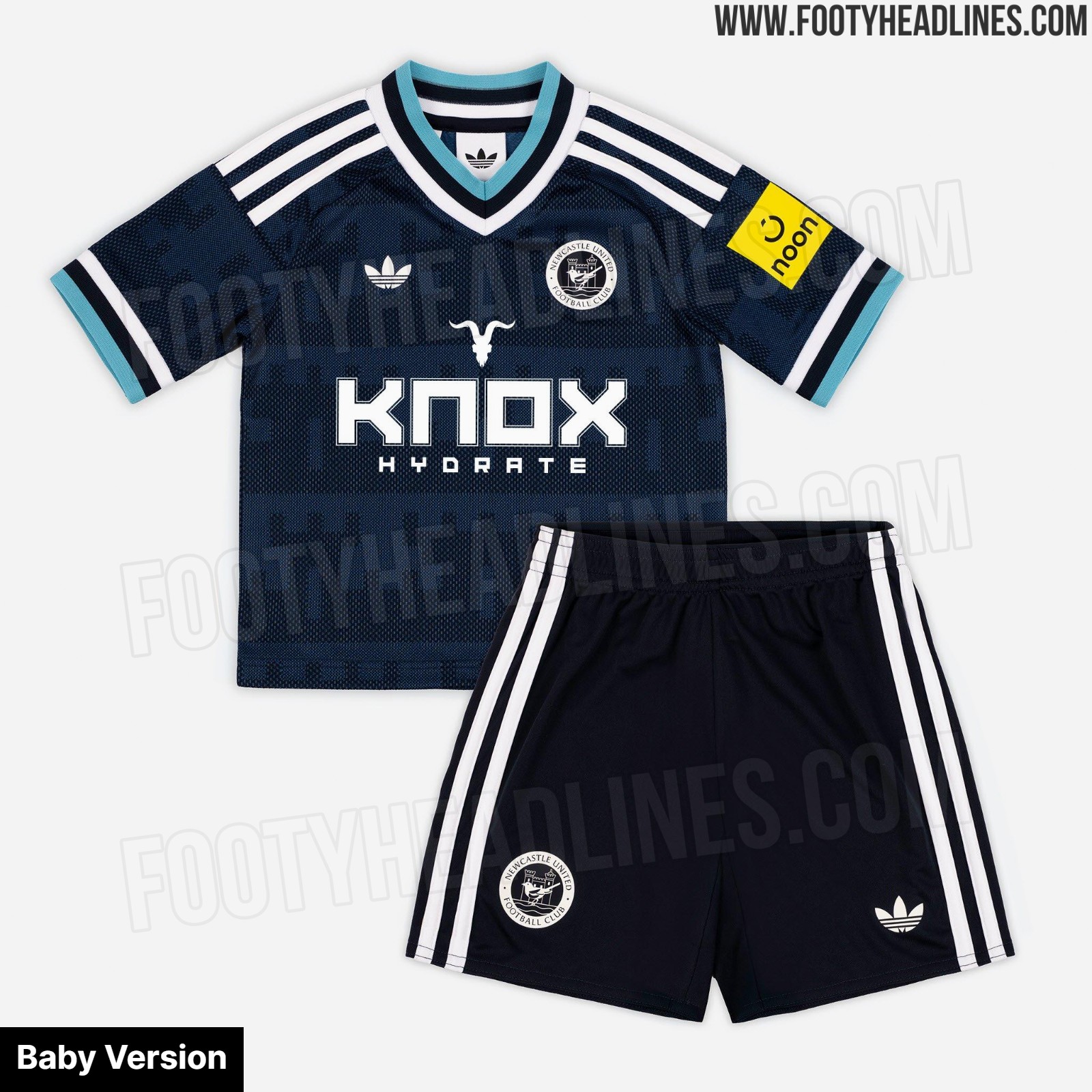
Every kids’ kit on the site carries the same 16-28 range, so once you know the number it applies across clubs. Recent additions include the Newcastle United 2026-27 home kit, the Celtic 2026-27 home kit and the Ajax 2026-27 home kit. For national-team shirts, the national teams category uses the identical scale.
Two things worth settling before you order. First, name and number printing changes nothing about the fit but does affect returns, so confirm the size before adding it — see our guide to personalising a football shirt. Second, a kids’ kit gets washed far more often than an adult one, so it is worth reading how to wash a football shirt before the first muddy Saturday. If you are still deciding which shirt to buy at all, our explainer on the difference between home, away and third kits is the place to start.
 Premier League
 La Liga
































 Serie A

















 Bundesliga


























 Liga MX











 Liga Portugal







 Ligue 1










 Kings League









 Brasileiro Serie A

























 MLS
MLS

















 Other Leagues