
Blog
Football Shirt Chest Measurements: How to Read a Size Chart


Brand size charts and factory size charts measure different things. Nike and adidas list your body chest; many replica charts list the shirt laid flat. Double any flat or pit-to-pit figure before comparing, and size up one for player-version cuts.
Most people who end up with a football shirt that does not fit did not pick the wrong size. They read the wrong kind of chart. Brand size guides and factory size guides measure two completely different things, and nobody tells you which one you are looking at.
How do I measure my chest for a football shirt?
Run a tape measure around the fullest part of your chest, just under the armpits, keeping it level all the way round your back. Keep it snug but not tight, and breathe normally. That single number — your chest circumference — is what every brand size chart is built around. Your usual t-shirt size is not.
What chest measurements do Nike and adidas use?
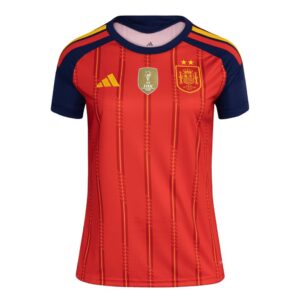
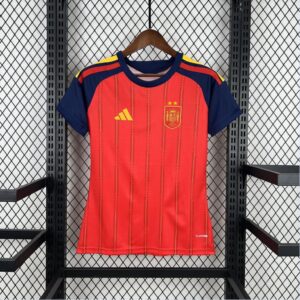

Both brands publish charts based on your body, not the shirt. Nike’s men’s football jersey sizing is given in inches:
| Size | Chest (inches) | Chest (cm, converted) |
|---|---|---|
| S | 35–37.5 | 89–95 |
| M | 37.5–41 | 95–104 |
| L | 41–44 | 104–112 |
| XL | 44–48.5 | 112–123 |
| XXL | 48.5–53.5 | 123–136 |
adidas publishes its men’s shirt and top sizing in centimetres:
| Size | Chest (cm) |
|---|---|
| XS | 83–86 |
| S | 87–92 |
| M | 93–100 |
| L | 101–108 |
| XL | 109–118 |
| XXL | 119–130 |
| 3XL | 131–142 |
Line those two up and you can already see the problem. A 103 cm chest is a large in Nike’s chart and a large in the adidas chart — but a 101 cm chest is a medium at Nike and a large at adidas. Same body, different label, and neither brand is wrong.
Why does the same size fit differently between makers?
Because roughly half the size charts in football are not measuring you at all. They are measuring the garment, laid flat.
Take a published chart from the retro maker Comma Football. Its medium is listed at 51 cm “width”, measured straight across the chest of the shirt as it lies on a table. That is not a 51 cm chest — it is half of the shirt’s circumference. Doubled, the garment goes around 102 cm, which is what actually has to fit over a body somewhat smaller than that.
So when one chart says “M = 93–100 cm” and another says “M = 51 cm”, they are not contradicting each other. One is describing a person and the other is describing a piece of fabric. Reading a garment chart as if it were a body chart is how a shirt ends up two sizes too small.
The tell is the column heading. Chest, bust or body means measure yourself. Width, pit-to-pit, flat or half chest means measure the shirt and double it.
How do I measure a shirt I already own?
This is the most reliable trick there is, because it removes the labels from the equation entirely. Find a shirt that fits you the way you want a football shirt to fit. Lay it flat, smooth out the wrinkles, and measure in a straight line from one armpit seam across to the other. Then double that number.
A pit-to-pit of 50 cm means the shirt measures about 100 cm around. Now you have a target you can compare against any chart in the world, whichever way it was written. If a listing only gives you flat measurements, compare flat to flat and skip the conversion altogether.
Add a little room to that target if you want a relaxed fit, and take a little off if you want the shirt close to the body.
Do player-version shirts run smaller than fan versions?
Yes, and this is the second most common sizing mistake after misreading a chart. Player-version shirts are cut to an athletic, close-to-the-body pattern designed for match use, while fan versions are cut with more room through the chest and waist. Kit retailers widely report the difference at roughly one to two sizes at the same label, and player-version ranges often stop at 3XL where fan versions continue to 4XL.
If you are moving from a fan version to a player version and you liked how the fan version fitted, plan on going up. Our full breakdown of the two cuts is in our player version vs fan version guide, and the differences in construction are covered in authentic vs replica shirts.
How do kids’ football shirt sizes work?
Youth kits are usually numbered rather than lettered, and the numbers refer to height rather than age. This is the pattern used across most youth kit ranges:
| Size | Age (approx.) | Height |
|---|---|---|
| 16 | 2–3 years | 90–100 cm |
| 18 | 4–5 years | 100–110 cm |
| 20 | 6–7 years | 110–120 cm |
| 22 | 8–9 years | 120–130 cm |
| 24 | 10–11 years | 130–140 cm |
| 26 | 12–13 years | 140–150 cm |
| 28 | 14–15 years | 150–160 cm |
Height beats age every time here, because two children of the same age can be 15 cm apart. There is more detail in our kids’ football shirt size guide, and women’s fit is covered separately in our women’s sizing guide.
The short version
Measure your chest once and write the number down. Check whether the chart in front of you is measuring a body or a shirt, and double the flat figures before you compare. Size up for player-version cuts. If you are still unsure, measure a shirt you already like and match the numbers rather than the letters — labels vary between makers, but centimetres do not.
Once you have your number, browse the 2026 World Cup shirts or start with our quick size answer if you just want the one-line version. Keeping the fit you paid for is easier if you also follow our shirt washing guide — hot washes are the fastest way to turn a good fit into a tight one.
Sources
- Nike men’s jersey chest sizing, via the U.S. Soccer official store size chart. Centimetre values are converted from the published inches.
- adidas men’s shirt and top size chart.
- Flat garment measurement example: Comma Football size chart.
- Hero image: photo by Jhonatan Saavedra Perales on Unsplash.
 Premier League
 La Liga









































 Serie A






















 Bundesliga





























 Liga MX











 Liga Portugal








 Ligue 1















 Kings League










 Brasileiro Serie A
































 MLS
MLS




















 Other Leagues