Get 10% Off Your First Order Today! Use code at checkout: WELCOME10


Football Shirt Printing in 2026: Fonts, Costs and Rules Explained

Last updated: 14 May 2026
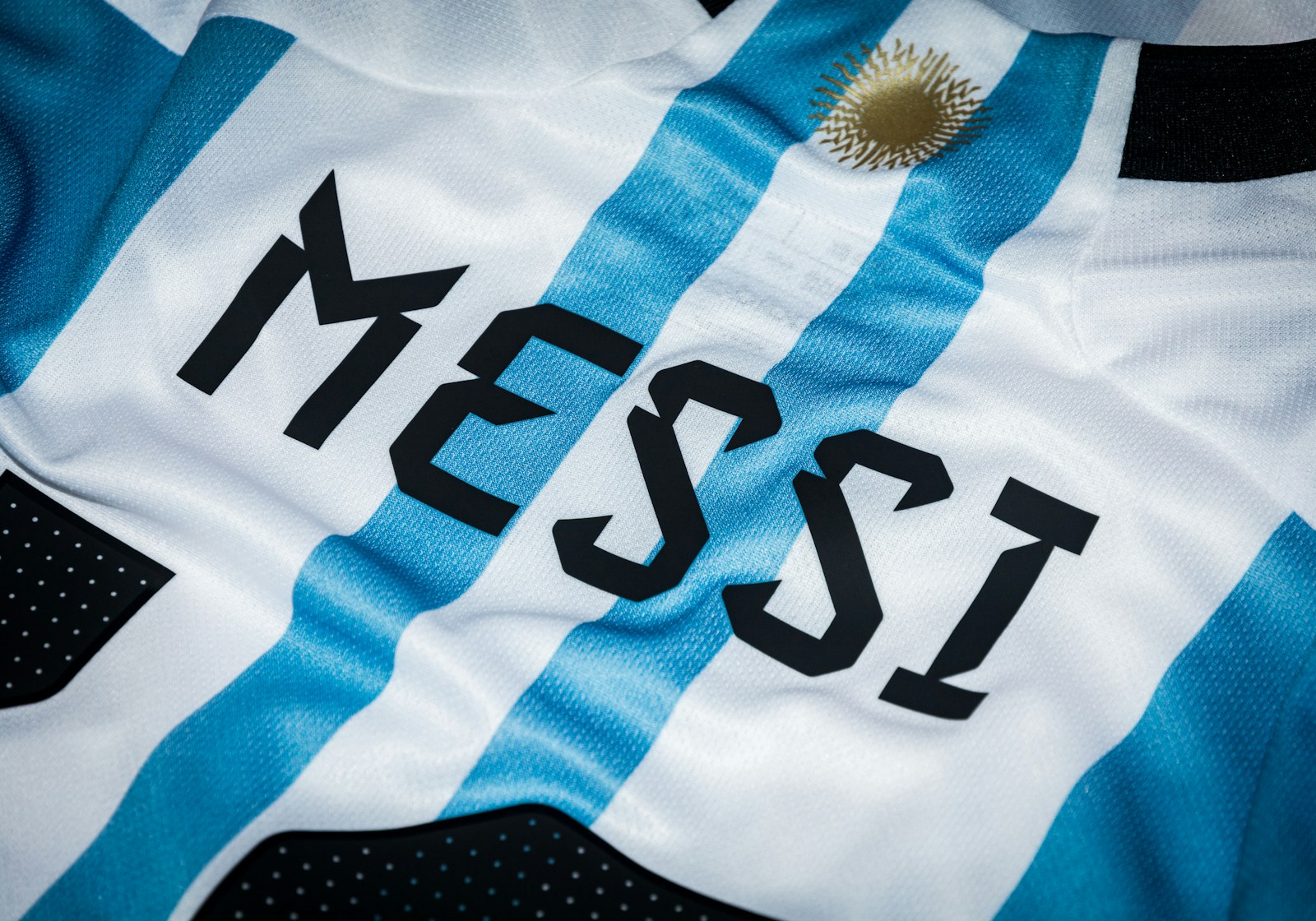
Football shirt printing turns a blank jersey into your jersey. Whether you want your own name on the back of a Real Madrid home shirt, Lamine Yamal’s number on a Barcelona kit, or a Champions League patch on the sleeve, the rules — and the costs — vary more than most fans realise. This guide breaks down what’s actually allowed in 2026, which fonts the major leagues mandate, what printing typically costs, and how to avoid the most common mistakes.
How football shirt printing actually works
Modern shirt printing uses one of three methods. Heat-pressed vinyl is the standard for replica and fan shirts: pre-cut letters and numbers are applied with a heat press at roughly 150–160°C. Sublimation bonds ink into the fabric itself and is mostly used on training tops and pre-match shirts. Flock printing, the raised velvety lettering used on retro kits from the 1990s, is still popular among collectors but rarely offered on current-season shirts.
The result you see on official Premier League and La Liga shirts is heat-pressed using league-controlled materials. The supplier — Avery Dennison for the Premier League — produces the letters and numbers in officially licensed type, then ships them to printers who apply them on demand.
Official league fonts in 2026
Since the early 2020s, the biggest European leagues have standardised typography. Every club within a competition uses the same name and number font, which makes it easier for broadcasters and easier for fans to identify players at a glance.
| League | Font in use | Mandatory league-wide? |
|---|---|---|
| Premier League | Bespoke font by Avery Dennison (introduced 2023-24) | Yes |
| La Liga | League-wide typeface | Yes (since 2021) |
| Serie A | Standardised league font | Yes |
| Bundesliga | Club-specific fonts permitted | No |
| Ligue 1 | League-wide typeface | Yes |
| UEFA Champions League | UCL-specific font | Yes (used in European nights only) |
That last row is the one that catches buyers out. A Real Madrid shirt worn in La Liga uses the La Liga font; the same shirt worn in the Champions League uses a different UEFA font, with the UCL starball patch on the sleeve. If you want the European version, you usually have to ask the printer specifically.
What it costs to print a shirt in 2026
Prices vary by retailer, country and shirt type, but the ranges are remarkably consistent across the industry:
- Name + number (replica/fan version): £10–£18
- Name + number (player/authentic version): £15–£25 — the heat-press process is the same, but tighter quality control bumps the price
- League sleeve patches (Premier League, La Liga, Serie A): £6–£12 per pair
- Champions League / Europa League sleeve patches: £8–£15
- Cup-final commemorative patches: £10–£20
Most shops bundle name, number and patches together for around £25–£35 — usually a small saving over buying each element separately. At 433fc.com printing is included on most player-version shirts during seasonal promotions, so check the product page before paying for it as an add-on.
Player names you can and can’t put on a shirt
Three things determine whether a name is allowed:
- Active squad registration. Most printers will only apply currently registered first-team players. If a player has transferred mid-season, expect a gap until the printer’s database updates.
- Profanity filters. League-licensed printers reject offensive words, slurs and political slogans. Personal names usually pass without issue.
- Length limits. Most replicas allow up to 12 characters; some authentic shirts cap at 10. Spaces and dots count.
Number ranges also matter. Premier League squad numbers are capped at 99. Goalkeepers traditionally take 1, 12 or 13. Spanish second teams (Barcelona Atlètic, Real Madrid Castilla) have their own number rules that override what fans assume from the senior squad.
Sleeve patches: a quick visual cue for collectors
Patches tell you, at a glance, which competition the shirt was worn in:
- The white square Premier League patches mean a domestic English top-flight match.
- The starball patch is exclusively Champions League.
- An orange/red La Liga patch means a domestic Spanish match.
- A gold patch usually denotes a defending champion (League winners) for the following season.
Authentic match-issue shirts from a specific game often carry an embroidered match-day patch — date, opponents and competition stitched onto the chest. Those are sold separately, usually direct from clubs after the season ends.
Common printing mistakes to avoid
Two issues account for most complaints we see from buyers:
1. Mixing seasons. A 2025-26 Liverpool shirt printed with a 2024-25 squad list will display players who no longer exist on the official database. Always confirm with the retailer that they’re printing for the correct season.
2. Wrong font for the version. Buying a player-version shirt and asking for the basic generic font defeats the point. If you’ve paid for authentic, insist on the league-licensed font and patches.
A third — less common but more expensive — mistake is washing a freshly printed shirt at high temperature within the first 48 hours. The adhesive needs to cure. Wait two days, then follow our jersey care guide for long-term advice.
Where to get a shirt printed
If you’ve bought a blank shirt and want it printed afterwards, you have three options:
- The original retailer. Most shops that sold you the shirt will print it if you bring it back — but some refuse to print on jerseys not bought from them.
- Licensed third-party printers. Specialist printing shops carry the official Avery Dennison and league materials. Costs are similar to in-house retailer pricing.
- 433fc’s authentic player-version range. Browse our Saudi Arabia 2026, Canada 2026, Inter Miami 2026/27, Borussia Dortmund 2026/27 or Boca Juniors 2025/26 player-version shirts — name and number customisation is available on every listing.
FAQ
Can I have my own name printed on a Premier League shirt?
Yes. Premier League licensing allows any non-offensive personal name up to the printer’s character limit. The font and number style remain the league-mandated set.
Why does printed lettering sometimes peel off?
Almost always heat damage. Tumble drying, ironing directly over the print, or washing above 30°C softens the adhesive. Inside-out, cold delicate cycle, line dry.
Are Champions League patches included with the shirt?
Only on club shops’ authentic European editions — and only after the club qualifies. On replica shirts they’re always sold separately.
How long does printing take?
Heat-pressing itself takes under five minutes. The realistic wait is whatever the retailer’s queue is — typically same-day for in-store, 1–3 days for online orders.
Can I get retired players printed on a current shirt?
Most licensed printers won’t do it on the current-season squad font, because retired players aren’t on the registered list. You’ll need a retro shirt or a custom (unlicensed) print.


 Premier League
 La Liga







 Serie A






 Bundesliga









 Liga MX






 Liga Portugal
 Ligue 1


 Kings League





 Brasileiro Serie A











 MLS
MLS










 Other Leagues