Get 10% Off Your First Order Today! Use code at checkout: WELCOME10


Remembering Brazil’s 1970 World Cup Kit: The Yellow Shirt That Defined a Golden Generation

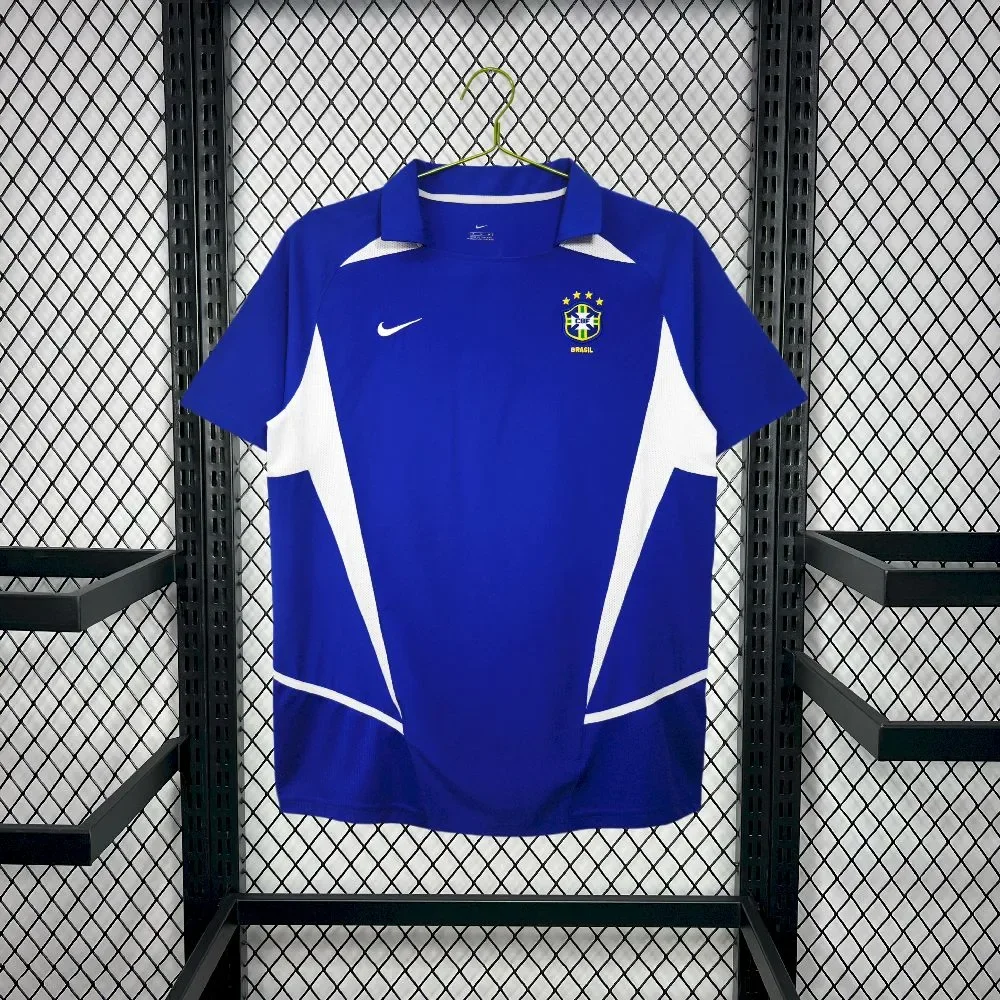
Fifty-six years on, Brazil’s 1970 World Cup shirt remains the most photographed, painted and replicated jersey in football history. The canary yellow with green trim, royal blue shorts and white socks: a kit so loaded with meaning that it stopped being clothing and became a symbol. With the 2026 World Cup closing in fast, it feels right to look back at the shirt that turned a tournament into a coronation.
🛒 Shop Brazil Jerseys — home, away & player versions, worldwide shipping.Shop Now →
The shirt that travelled to Mexico
Brazil arrived in Mexico in May 1970 as wounded favourites. Four years earlier, they had been kicked out of England in the group stage, Pelé limping off the pitch and reportedly vowing never to play in another World Cup. The 1970 squad was rebuilt around him, with Tostão, Gerson, Jairzinho, Rivellino and the captain Carlos Alberto forming a midfield and attack that many still rate as the finest ever assembled.
The kit they wore was deceptively simple. A v-neck collared shirt in solid yellow, the CBD crest stitched on the left chest, royal blue shorts with a thin yellow stripe and white socks turned over at the top. There was no manufacturer logo. Adidas would not put its trefoil on a Brazil shirt until later in the decade, and in 1970 the strip was supplied by Athleta of São Paulo.
Why yellow at all?
The canary shirt was barely twenty years old in 1970. Brazil had worn white until the disaster of the 1950 Maracanazo, when Uruguay snatched the World Cup on home soil. A newspaper competition the following year invited readers to design a new strip that included all four colours of the national flag. The winning entry, by 19-year-old illustrator Aldyr Garcia Schlee, paired yellow with green trim, blue shorts and white socks. The first competitive outing came in 1954, but it was Mexico 1970 that branded the colour scheme onto the global imagination.
Colour television, perfect timing
Mexico 1970 was the first World Cup broadcast live in colour across much of the world. Viewers in Europe who had only ever seen Brazil in black-and-white newsreels suddenly watched Jairzinho’s yellow shirt blaze against the green Aztec turf. The timing was extraordinary. A team playing the most beautiful football of the era was finally being shown in the colours it was designed for, beamed into living rooms from Glasgow to Tokyo.
The final against Italy on 21 June produced the moment that fixed the kit in folklore: Carlos Alberto thundering onto Pelé’s casual lay-off to make it 4-1, the yellow shirt streaking down the right touchline. It is still the goal most often replayed when broadcasters need to define what football can look like.
Construction and small details
The original 1970 shirts were short-sleeved, made from a heavyweight cotton-blend knit that absorbed sweat and weighed considerably more than modern polyester. Numbers were stitched in green felt on the back only, with no names. The collar was a soft v-neck with a single green band, and the crest sat directly on the fabric without a backing patch. Players were issued two shirts per match, with most surviving originals showing heavy salt staining around the chest and back from the Mexican heat.
Compared with the slick tailoring of later Brazil shirts, the 1970 version looks almost agricultural up close. That is part of the charm. There is nothing performance-engineered about it. It is a shirt designed to be worn while playing football, and it happens to be perfect.
Where the legend lives now
Pelé’s match-worn final shirt sold at Christie’s in 2002 for £157,750, then a world record for any football jersey. Carlos Alberto’s shirt is displayed at the Museu do Futebol in São Paulo. Jairzinho’s, which he wore to score in every match of the tournament, remains in his personal collection.
For everyone else, the route to owning the design is the modern retro market. Reissues vary wildly in fidelity: some get the crest wrong, others use the post-1971 Adidas template, a few use modern polyester that ruins the drape. The closest current reproductions stick to a cotton-style fabric, the correct CBD crest with the four small stars added later removed, and a properly cut v-neck. Our Brazil 1970 World Cup retro jersey follows that brief.
Kits from the same tournament worth a look
Mexico 1970 was a vintage year for design across the board. The hosts wore a striking green shirt with a red and white sash on the sleeves, captured in our Mexico 1970 home retro jersey. Italy’s blue, England’s red change strip from the final group stage and Peru’s diagonal red sash all came from the same tournament. Pelé himself spent the season either side of the World Cup in the white and black of Santos, a kit available as the Santos 1970 retro jersey.
What the 1970 kit teaches modern designers
Nike, Adidas and Puma all chase the Brazil 1970 silhouette every four years and rarely catch it. The 2002 shirt that Ronaldo wore in Yokohama came close. The 2022 version, with its almost-fluorescent yellow and busy collar trim, drifted away from it. The lesson is consistent: the original works because nothing about it shouts. The shirt steps back and lets the player wear it.
That restraint is what made it survive every reissue, parody and bootleg. It is also why, in 2026, when Brazil walk out in their next World Cup kit, the question every commentator will ask is the same one they have asked since Mexico: how close to 1970 did they get?
FAQ
Who made the Brazil 1970 World Cup shirt?
The shirts were supplied by Athleta, a São Paulo manufacturer. Adidas did not begin producing Brazil’s kit until later in the 1970s.
How many stars were on the 1970 Brazil shirt?
None. Stars above the CBD crest were added retrospectively to mark World Cup wins. The 1970 shirt was worn without stars and the three-star version came in afterwards.
Why is the Brazil shirt yellow?
The yellow-and-green strip was the winning entry in a 1953 newspaper competition to redesign the national kit after the 1950 Maracanazo. Brazil had worn white before then.
Is the 1970 retro shirt the same as the 1958 or 1962 version?
No. Cuts, collars and crests differ. The 1970 version has a softer v-neck and a slightly altered CBD badge compared with earlier editions.
🛒 Shop Brazil Jerseys — home, away & player versions, worldwide shipping.Shop Now →



 Premier League
 La Liga








 Serie A








 Bundesliga














 Liga MX




 Liga Portugal

 Ligue 1







 Kings League







 Brasileiro Serie A
















 MLS
MLS










 Other Leagues